

Homemade apple cider vinegar
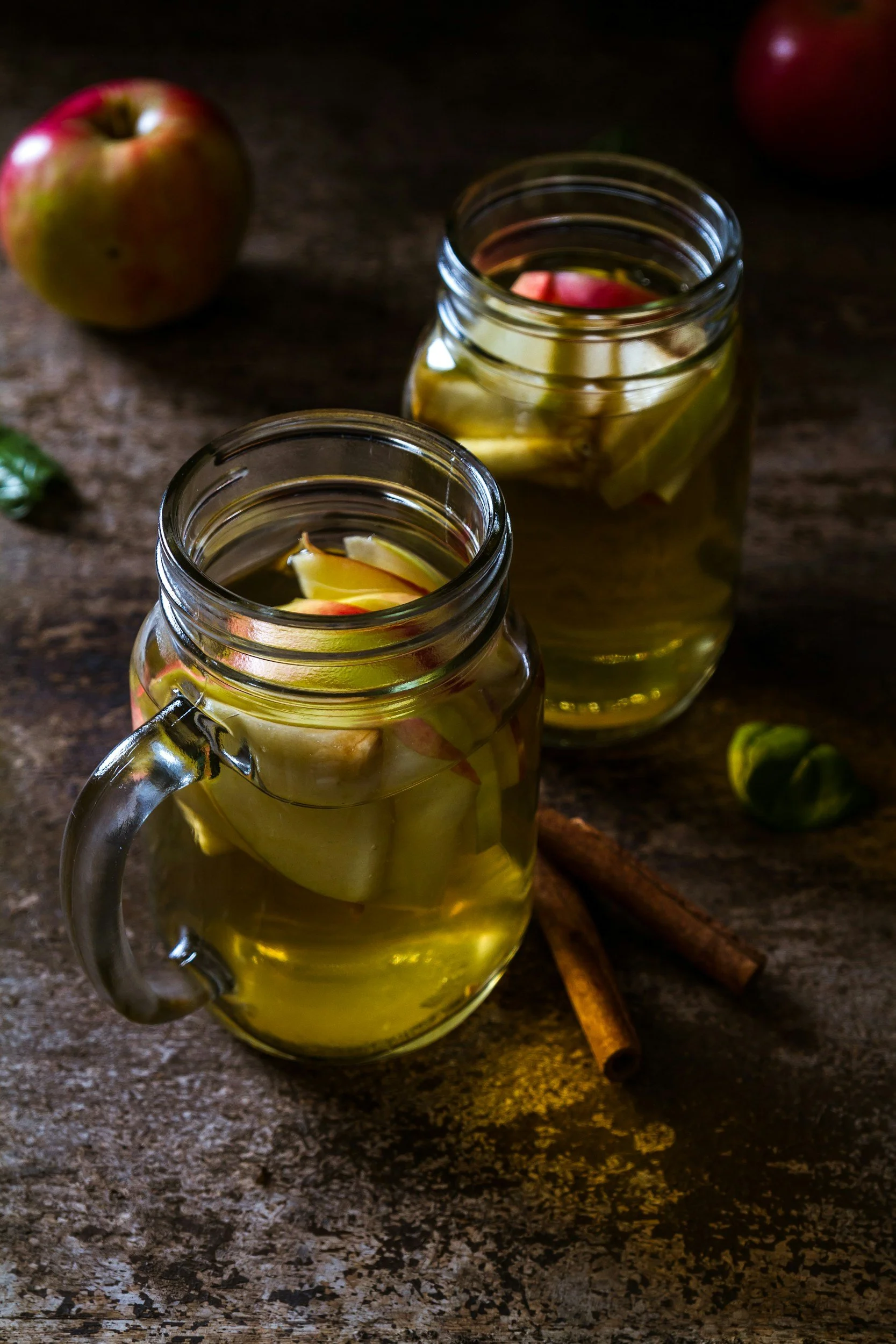
Homemade Apple Cider Vinegar
One of my favorite ways to use up extra apples and scraps this time of year! Homemade apple cider vinegar is a simple fermented staple that has tons of benefits.
Why I love ACV: Beyond being a delicious pantry staple, apple cider vinegar is rich in acetic acid, which has been studied for its role in digestion, post-meal blood sugar response, insulin sensitivity and satiety. I especially love using it before meals as a simple way to support digestion. And making it at home is such a fun way to use up extra apples and scraps instead of letting them go to waste. I find homemade ACV is a little less harsh and bitter than many store-bought versions, but I still dilute mine in water before drinking it.
I personally love having a small diluted glass before a meal to support digestion. I find that homemade ACV tends to be a little less harsh and bitter than some store-bought versions, but I still always dilute it with water. Throw in a pinch of cinnamon and mix in lemon for a really nice digestive elixir and save money on the pricey enzymes.
What you’ll need:
Apples and apple scraps (peels + cores, organic if possible)
Filtered water
1–2 tbsp raw, unfiltered apple cider vinegar with “the mother”
1–2 tbsp organic cane sugar per cup of water or apple used
Glass jar
How to make it:
Add your apples and scraps to a clean glass jar leaving a some room. Cover completely with filtered water, then add the sugar or honey. Stir well.
Cover with a breathable cloth or coffee filter and secure with a rubber band OR loosen the top so the mixture can breathe. Let it sit at room temperature for 2–4 weeks, stirring every few days and making sure the apples stay submerged.
Once it smells pleasantly sour and vinegar-like, strain out the apples and let the liquid ferment for another 2–4 weeks, tasting periodically until it reaches your preferred acidity.
Store your finished vinegar in a clean bottle or jar.